
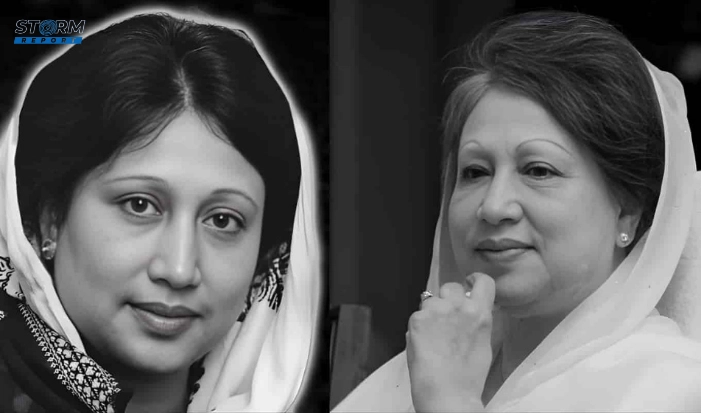
Khaleda Zia is still one of the most important and divisive people in Bangladesh’s political history. She represents both the hope of democratic leadership and the danger of fierce political rivalry. Her rise to power as Bangladesh’s first female Prime Minister changed the country’s politics, and her fall from power showed the deep structural problems that still exist in the country.
Her story isn’t just a biography of power; it’s also a look back at Bangladesh’s rocky path to democracy.
Early Life and Political Awakening
Khaleda Zia was born in 1945 and lived a mostly private life until politics came into her life. She was married to Ziaur Rahman, a decorated military officer who became a national hero during the Bangladesh Liberation War in 1971 and later became president.
The death of Ziaur Rahman in 1981 was a turning point. She went from being a sad widow to a political symbol overnight. What started out as a ceremonial job quickly turned into a serious political mission.
Tragedy shaped her entry into public life, but her strength kept her going.
Khaleda Zia’s Entry Into National Politics
The Bangladesh Nationalist Party’s Leadership
Khaleda Zia took over as leader of the Bangladesh Nationalist Party (BNP) after her husband died. Even though she had never been involved in politics before, she was able to get people to support her in surprising ways.
Her leadership style stressed nationalism, parliamentary democracy, and civilian supremacy. These ideas appealed to voters who were tired of military rule.
A Political Underdog
At a time when experienced men were in charge of politics, her rise went against deeply held ideas about gender roles.
The Fight for Democracy and the End of Military Rule
In the 1980s, a military-backed government ran Bangladesh. Khaleda Zia became a key player in the pro-democracy movement that fought against authoritarian rule.
She set up big protests, strikes, and alliances with opposition groups. Her determination played a big role in the end of military rule in 1990.
During this time, she became a real national leader instead of just a symbol.
First Term as Prime Minister (1991–1996)
In 1991, Khaleda Zia led the BNP to victory in Bangladesh’s first democratic election after years of military rule. She became the country’s first female Prime Minister.
Bringing Back Parliamentary Democracy
One of her biggest accomplishments was bringing back the parliamentary system, which had been replaced by the presidential system during military rule.
This action made democratic institutions stronger and put civilian power back in place.
Changes to the economy and the way things are run
Her government worked on privatization, market-oriented reforms, and fiscal discipline, which helped the economy stabilize after authoritarian rule.
Reforms, Government, and the Economy
During her first term, Khaleda Zia prioritized economic liberalization and infrastructure development. Bangladesh’s economy grew at a moderate rate, and its relations with other countries got better.
But the divide between political parties grew. Opposition parties said that her government was stifling dissent and concentrating power.
Even though there was progress, problems with governance started to show up.
Return to Power and Second Term (2001–2006)
After being in the opposition for a while, Khaleda Zia won a strong electoral mandate to return to office in 2001.
This second term was the peak of her political power.
Growth and Development of the Economy
Bangladesh’s GDP grew steadily, remittances rose, and exports grew. Infrastructure and energy projects picked up speed.
But this time also saw the start of some very serious arguments.
The Rivalry Between Khaleda Zia and Hasina
For decades, the fight between Khaleda Zia and Sheikh Hasina shaped the political culture of Bangladesh. People often said the fight was very personal, which led to constant conflict.
Boycotts of Parliament, protests in the streets, and strikes all over the country became common.
Politics turned into a zero-sum game instead of a way to build consensus, which hurt democratic institutions.
Problems and Criticism of Governance
People who didn’t like Khaleda Zia’s government said it didn’t do enough to stop corruption, made the civil service political, and let extremists in.
International watchdogs were worried about the standards of governance, press freedom, and the independence of the courts.
As political instability continued, people’s trust in the government slowly faded.
Claims of Corruption and Legal Cases
A Change of Direction
The loss of power by Khaleda Zia’s government in 2006 was the biggest blow to her career. There were cases against her for corruption that said she misused money from charitable trusts.
She said the claims were false and politically motivated.
Sentence and Conviction
She was found guilty and sent to prison in 2018, which meant she couldn’t run for office or vote.
The conviction was a huge drop in power.
Arrest, Conviction, and Political Exile
After she was put in jail, Khaleda Zia became more and more cut off from public life. Without her leadership, her party had a hard time getting people to work together.
Her imprisonment marked the end of a time when two very powerful politicians ruled.
Debate on Health Crisis and Humanitarian Issues
In the last few years, Khaleda Zia has had serious health problems, which has led to calls for help from her supporters and people around the world.
Her worsening health brought back up discussions about justice, compassion, and political reconciliation.
Even people who didn’t like it agreed that it needed to be done humanely.
How Khaleda Zia Changed Women in Politics
Khaleda Zia was the first woman to be Prime Minister of Bangladesh. She broke down barriers in a society that was very male-dominated.
Her leadership encouraged more women to get involved in politics, showing that women can hold power at the highest levels even when society is against it.
She didn’t just govern; she also changed society.
Political Legacy and Historical Judgment
There is still a lot of disagreement about Khaleda Zia‘s legacy. Her supporters see her as a defender of democracy who stood up to military rule. Critics say that she made politics more divided and made institutions weaker.
Her career is a mix of democratic hope and political conflict.
Bangladesh’s Politics After Khaleda Zia
Bangladesh’s opposition politics have changed since Khaleda Zia left. Democratic balance is still under threat from leadership gaps, weakened institutions, and centralized power.
Read our analysis of South Asian political leadership transitions for more information about the region.
Readers can get more information about the legal and political situation by reading unbiased news from https://www.bbc.com.
Conclusion: A Life That Changed a Country
Khaleda Zia’s rise and fall are an important part of Bangladesh’s modern political history. Her journey from being a reluctant politician to being Prime Minister twice and then a prisoner shows how unstable power can be in a weak democracy.
Khaleda Zia is a figure who will never be forgotten, whether she is remembered as a pioneer of democracy or a divisive leader. Her legacy continues to shape Bangladesh’s political discourse.
In the end, her story is about ambition, strength, conflict, and what happens as a result.
More stories, more clarity — stay tuned with Storm Report!