
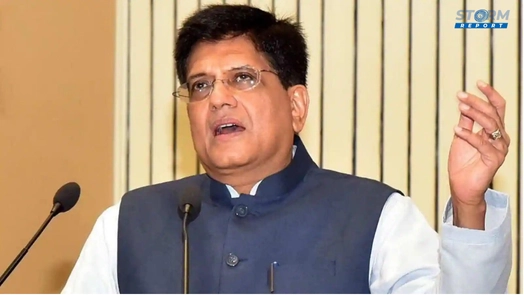
India’s Minister of Commerce and Industry, Piyush Goyal, has made a strong and urgent call for the country’s plastics industry to achieve 100% reuse and recycling of plastics. At a major industry event, Piyush Goyal stressed that this transformative goal is in line with India’s long-term sustainability roadmap, its climate commitments, and its rapidly expanding circular economy initiatives.
This strong call from Piyush Goyal is one of the most ambitious orders ever given to the industry. It shows that the government is serious about lowering pollution, cutting down on waste, and making the plastics industry more environmentally friendly.
He said that India, which is one of the biggest users and producers of plastic in the world, needs to use “innovative, future-ready solutions,” such as new recycling systems, better ways to separate waste, and environmentally friendly ways to make things.
What Piyush Goyal Wants to Do with Total Reuse
Piyush Goyal says that the move toward 100% recycling is not just a suggestion but a must. Despite big changes like extended producer responsibility (EPR), bans on single-use plastics, and public behavior campaigns, India’s use of plastics keeps going up every year.
Piyush Goyal talked about a few important reasons for this strong push:
- Environmental urgency: India is dealing with more pollution because of plastic waste that isn’t being handled properly.
- Economic opportunity: Recycling creates jobs, makes manufacturing more efficient, and lowers the cost of raw materials.
- Global competitiveness: The countries that adopt circular economy standards will be the leaders in trade and sustainable manufacturing in the future.
- Climate goals: India’s promise to reach net-zero emissions means that all industries must have less of an impact on the environment. Piyush Goyal said, “We can’t count on partial recycling or slow reforms.” “India must take the lead with strong action.”
The Plastics Industry’s Response to Piyush Goyal’s Call
The plastics industry has really taken Piyush Goyal’s challenge to heart. Leaders from big manufacturing groups agreed that they need to work together, strengthen policies, and put money into new recycling technologies.
Important points that industry leaders made:
- Adding high-efficiency technology to recycling units
- Forming partnerships with companies that handle waste
- Adding more places to collect plastic waste after it has been used
- Giving more money to research recyclable alternatives
Representatives from the industry promised to look at how well they are currently recycling and to expand their operations to meet national goals. Piyush Goyal said that the industry should become a global model for sustainable plastics management. He told companies to set yearly goals that can be measured and to use clear monitoring systems. Readers can find more information about the Ministry’s official sustainability agenda here:
https://pib.gov.in The Press Information Bureau is the official news source for the Indian government.
National Goals, Circular Economy, and Sustainability
Piyush Goyal and India’s Push for a Circular Economy
Piyush Goyal said that India’s move toward a circular economy, where products are reused, regenerated, and recycled all the time, is important for long-term growth.
He connected the plastics mission to some of the most important national goals, such as:
- Lessening reliance on new plastic
- Supporting biodegradable alternatives
- Building closed-loop manufacturing systems
- Supporting eco-friendly supply chains
Effect on Climate Goals Piyush Goyal said that India’s plan for dealing with climate change aims for “big cuts in emissions from waste.” Under the Paris Agreement, plastics recycling is an important part of the country’s nationally determined contributions (NDCs).
Problems with Piyush Goyal’s Goal
Piyush Goyal’s goal of 100% recycling is inspiring, but there are still some operational problems to solve:
1. Not Enough Infrastructure for Segregation
Weak separation methods send millions of tons of recyclable trash to landfills.
2. The High Cost of Advanced Recycling Technology
Chemical recycling and mechanical recycling on a large scale both need a lot of money up front.
3. Low Consumer Awareness
People still don’t know much about recycling symbols, sorting trash, and using things more than once.
4. Integration of the Informal Sector
India’s waste management depends a lot on informal workers, who need to be trained and included in the new system in a safe way.
Even though these problems exist, Piyush Goyal said that it is completely possible to achieve this goal with public-private partnerships, strong policy frameworks, and ongoing public awareness campaigns.
Government Policies Helping the Mission
Several important policies are already in place to help Piyush Goyal’s dramatic push for a plastic-free India:
- Extended Producer Responsibility (EPR) Companies should be responsible for collecting and recycling the plastic they make.
- No more single-use plastics The government has limited the use of some single-use items across the country.
- Missions for Waste-to-Wealth Technology These government-run programs encourage turning plastic trash into fuel, building materials, and raw materials for businesses.
- Green Manufacturing Incentives Manufacturers who use equipment that is good for recycling can get tax breaks and other help. Piyush Goyal thinks that if these rules are followed to the letter, the plastics industry can become the most environmentally friendly in the world.
Final Thoughts
Piyush Goyal’s strong message to India’s plastics industry marks a turning point in the country’s efforts to be more environmentally friendly. He has set a strong and ambitious goal that is in line with global environmental goals by calling for 100% plastic reuse and recycling.
The way forward needs:
- Strong commitment from the industry
- Ongoing investment in new recycling technologies
- Raising awareness and changing behavior across the country
- Close cooperation between the government and manufacturers
If done right, Piyush Goyal’s vision could make India the world leader in sustainable plastics management. This would make cities cleaner, industries stronger, and the environment healthier for future generations. Just say it!
More stories, more clarity — stay tuned with Storm Report!